New rules and regulations from 1 January 2026

- KVK Editors
- The basis
- Edited 8 January 2026
- 7 min
- Starting, Managing and growing
- Rules and laws
On 1 January 2026, new laws, regulations, and legislative changes took effect. For example, VAT on overnight stays increased, the private business ownership allowance is further reduced, and cash payments over €3,000 are banned. Various other taxes and regulations for cars, energy, and staff have also changed.
Taxes
Income tax: brackets and rates have changed.
The rates in Box of income tax in 2026 are:
| Bracket | Threshold 2025 | Percentage 2025 | Threshold 2026 | Percentage 2026 |
| 1 | up to €38,441 | 35.82% | up to €38,883 | 35.75% |
| 2 | from €38,442 up to €76,817 | 37.48% | from €38,884 up to €79,137 | 37.56% |
| 3 | above €76,817 | 49.50% | above €79,137 | 49.50% |
Do you receive a state pension (AOW)? Then different apply.
Calculate your income tax for 2026 and check whether you will be better or worse off.
Another year of excise duty rebate on petrol, diesel and LPG
The excise duty rebate on petrol, diesel and LPG has been extended for another , until 1 January 2027. However, the discount is slightly lower due to an amendment by the House of Representatives (Tweede Kamer). This means excise duties are:
- €0.84 per litre of petrol
- €0.55 per litre of diesel
- €0.20 per litre of LPG
With the rebate, the government wants to keep driving affordable.
Private business ownership allowance further reduced
The private business ownership allowance (zelfstandigenaftrek) has been further reduced in 2026. In 2025, the deduction was €2,470. In 2026, it is less than half that, €1,200. You can deduct this amount from your profits, which means you pay less tax.
In the coming years, the private business ownership will be further reduced. You are entitled to this allowance if you work at least 1,225 hours per year in your business.
Taxes on overnight stays increased
The VAT rate on overnight has increased from 9% to 21%. This applies to hotels, holiday homes, bed and breakfasts (B&Bs), guesthouses, hostels, furnished mobile homes, and accommodation rented out via platforms.
The change took effect on 1 January 2026. The new rate also applies if someone booked in 2025 for an overnight stay in 2026, even if they paid for it in 2025. Please note: the VAT rate for camping will remain at 9%.
Property transfer tax on housing investments reduced
Are you buying a residential property as an investment? To rent out or as a holiday home? Then you will now pay less property transfer : 8% instead of 10.4%. The government expects this to encourage people to buy more properties to let. This will increase the number of properties available.
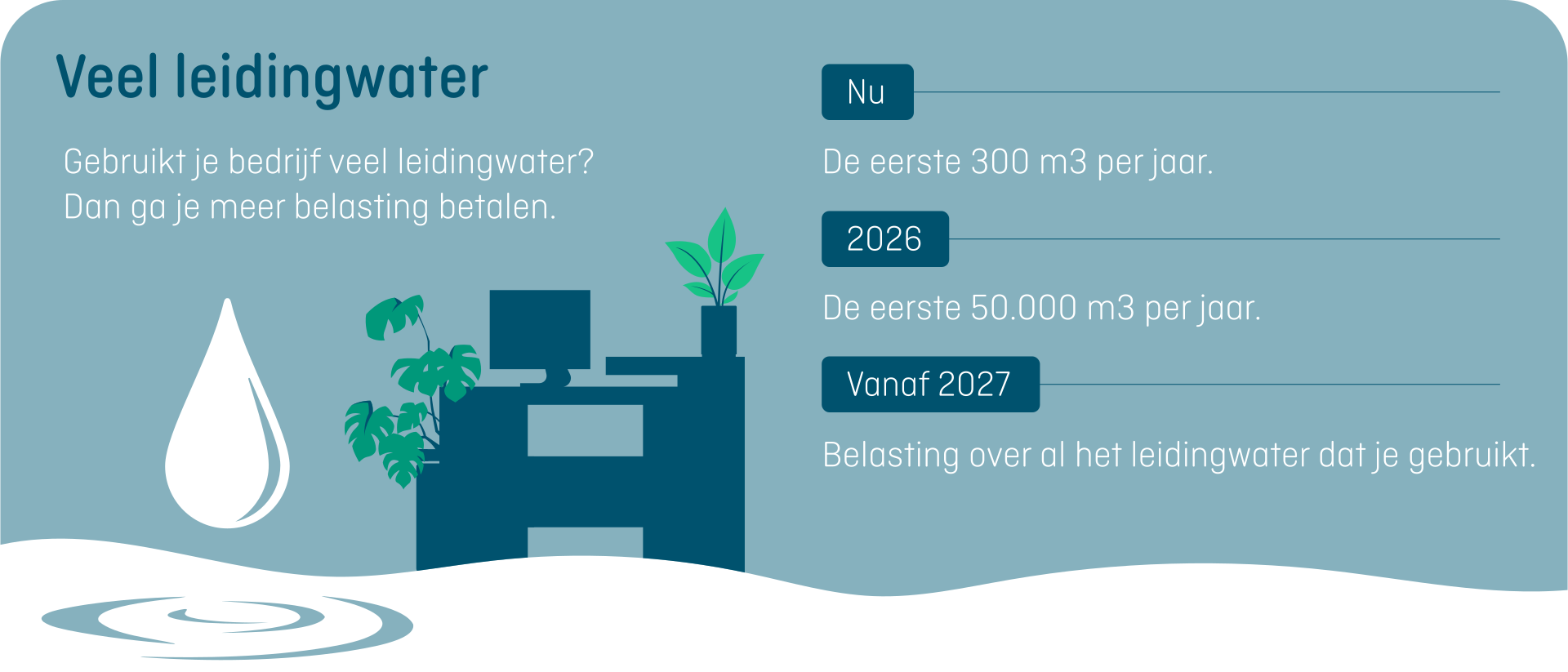
Tax on consumption of more than 300 m³ of tap water
Does your business use a lot of tap ? Then you pay more tax. In 2025 you only paid tax on the first 300 m³ per year. From 2026, this is the first 50,000 m³.
From 2027, this limit will disappear altogether. You will then pay tax on all the tap water you use.
BOR and DSR only for ordinary shares and a minimum of 5%
Do you receive shares in a company through a gift or inheritance? Or are you transferring shares in your business? The business succession scheme (BOR) and transfer scheme changed on 1 January 2026. These tax benefits will only apply to ordinary shares. And the shareholder must own at least 5% of the shares. This makes the scheme less attractive for some investors and families.
Quarter rates for motor vehicle tax to be abolished *
The quarter for motor vehicle tax (motorrijtuigenbelasting, MRB) has been abolished. Previously, some motorists paid only 25% of the normal MRB.
New (in Dutch) apply to the following vehicles:
- Cars with zero CO2 emissions pay 70% or 75% of the full motor vehicle tax rate for a fossil fuel-powered passenger vehicle.
- Camper vans pay half instead of a quarter.
- Other fully electric or hydrogen-powered vehicles lose their advantage entirely. You pay the full MRB amount for these vehicles. This also applies to vehicles used to transport horses (horseboxes).
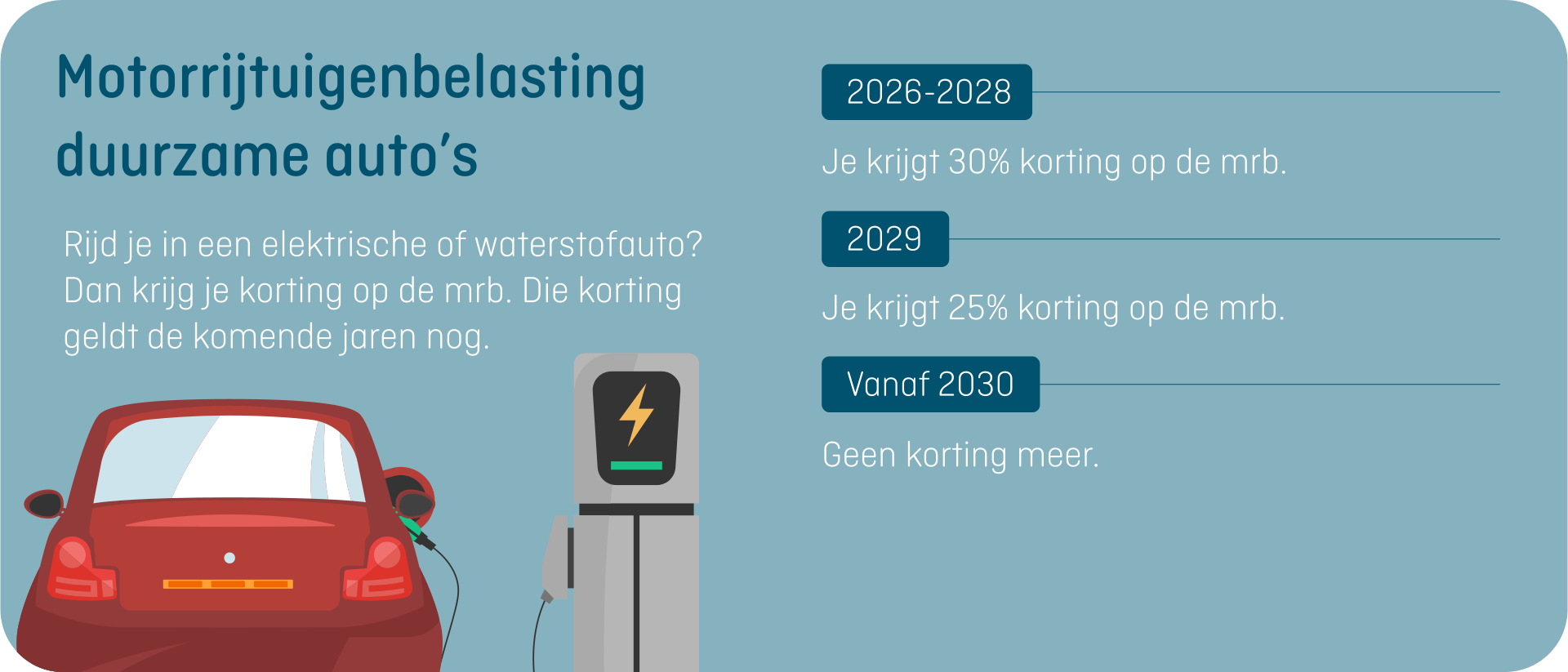
Discount on motor vehicle tax for sustainable cars extended
Do you drive a hydrogen or electric passenger car? Then in 2025, you paid motor vehicle tax (MRB) for the first time with a 75% discount. The discount was set to end in 2026, but it remains in for the time being to encourage emission-free driving.
- From 2026 to 2028, a 30% discount applies to new and second-hand passenger vehicles with zero emissions.
- In 2029, a 25% discount will apply to zero-emission passenger vehicles.
- In 2030, there will be no discount.
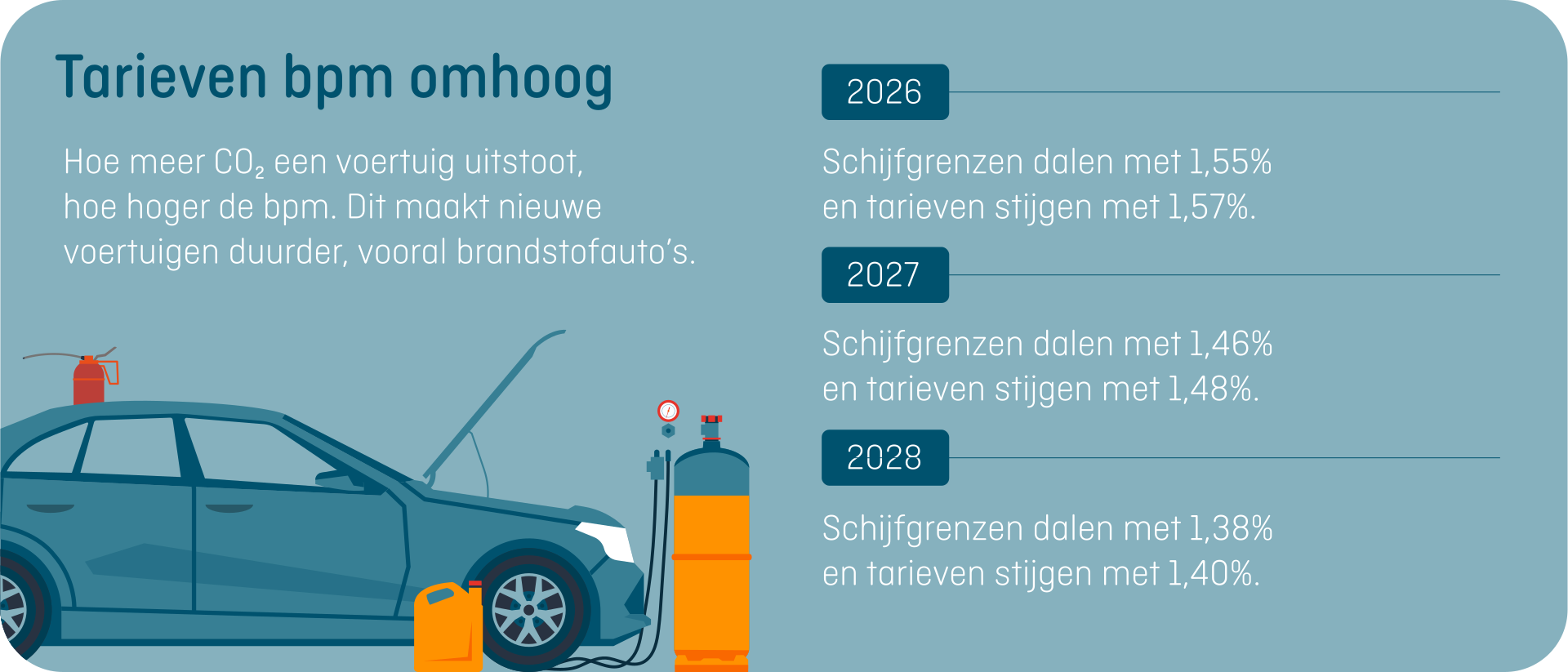
BPM rates increased
The tax you pay when you buy a car, van, or motorbike (BPM) has gone . The more CO₂ a vehicle emits, the higher the BPM. This makes new vehicles more expensive, especially fuel cars. The government will adjust the rates step by step over the next few years: they will go up slightly every year until 2028.
VAT refund for customers outside the EU goes digital
Are you a retailer and sell to customers living outside the EU? If so, they can reclaim VAT on their purchase. Since 1 January 2026, you must arrange this VAT refund . You can no longer use paper invoices and stamps. You register the purchase digitally or, through an intermediary or (in Dutch). Log in with eHerkenning or DigiD.
Your customers use the app ‘NL Customs ’ (in Dutch, in the app itself you can choose various languages) to apply for their VAT refund.
Transitional period: until 31 March 2026 you may still have paper invoices approved for purchases made before 31 December 2025.
Staff
Minimum wage up
Do you employ staff and pay the minimum wage? The legal minimum hourly (in Dutch) has gone up and is €14.71 gross per hour from 1 January 2026 for workers aged 21 and over. The minimum wage is adjusted every six months.
Hiring people with occupational disabilities made easier
It has become easier for entrepreneurs with more than 25 employees to hire people with occupational .
The labour costs compensation subsidy (LKV) for an employee now applies for as long as they are employed. Previously, the LKV applied for a maximum of 3 years. Also, a special statement from the UWV is no longer required to receive this subsidy. If you employ more people with occupational disabilities than required by the quota (in Dutch), you will also receive a higher LKV as a bonus.
No more LKV for older employees
You no longer receive labour costs compensation for employees aged 56 or who joined the company on or after 1 January 2024. This subsidy was intended to encourage employers to hire older employees. The benefit will continue to apply to employees hired before 2024.
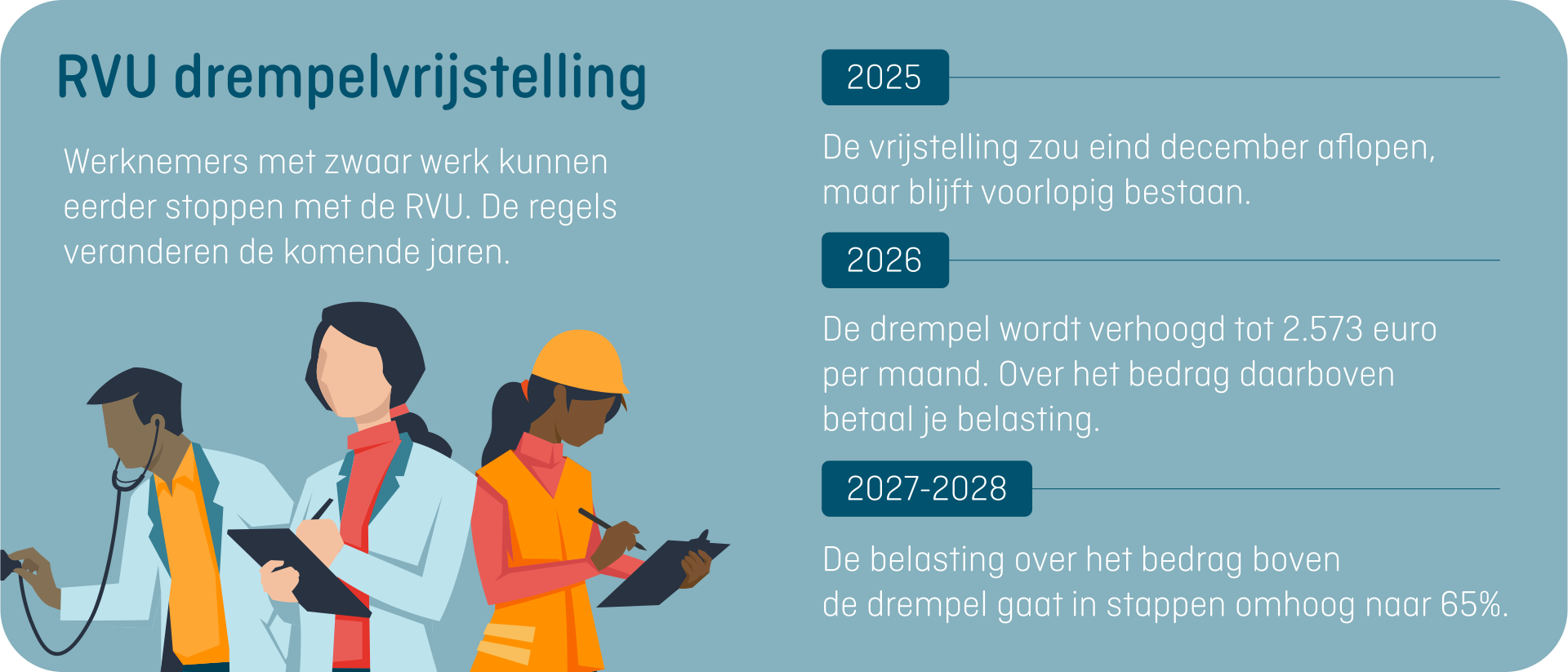
Exemption threshold Early Retirement Scheme (RVU) extended *
Do you have employees with physically demanding jobs who want to retire early? The RVU makes this possible. As an employer, you pay a benefit until the employee reaches retirement age. The exemption threshold for RVU has been extended. This means that you do not pay tax on the first €2,573 of the benefit. This amount is approximately €300 higher than in 2025. You do pay tax on the part of the benefit above this amount. This will increase in stages to a maximum of 65% in 2028.
Other
No more than 8 children in a BSO bus
Do you run an out-of-school care centre (BSO) and do you transport children from school to the BSO location with a BSO bus? Since 1 January 2026, you may only transport a maximum of 8 children at a time with a BSO . Do you have more children in care? Then you must make more trips or find another solution. This rule should improve child safety.
Childcare providers must report serious incidents
As a childcare organisation or childminder, you must report serious incidents to the municipal health service (GGD). Examples include accidents that result in a child being taken to hospital. The government wants to better identify the risks in childcare and increase the safety of children.
Digital communication with the authorities always possible
From 2026, you are able to arrange official matters with municipalities, provinces, and water authorities. In most cases, communication on paper will still be possible.
GACS software mandatory for office buildings, shops, and warehouses
Do you own an office building, shop, or warehouse with heating or air conditioning systems with a capacity of more than 290 kW? Then you must use the GACS software . This system helps you monitor your energy consumption and save energy. From 2030, this will apply to systems above 70 kW.
Ban on cash payments over €3,000
Do you ever settle large amounts in cash? Since 1 January 2026,cash payments over €3,000 are . You must pay by debit card, bank transfer, or another digital method. The government wants to combat money laundering and fraud with this measure.
Business.gov.nl
On Business.gov.nl, you can find all relevant upcoming changes in laws and . Or go to , type in a keyword, and choose the Regulations or Amendments tab in the search results.
How are laws made?
Sometimes a new law or an amendment is announced, and then does not go ahead, or the effective date is postponed. Why do some announced laws come into effect, while others do not?
Roughly speaking, the legislation process works like this. Ministries and the lower house of parliament (Tweede Kamer) prepare laws. Once the lower house of parliament has approved a law, it goes to the upper house (Eerste Kamer). They can only accept or reject the law. If the upper house accepts the proposal, the government publishes the new law in the Staatsblad (Government Gazette).
The effective date of a law can be mentioned in the law itself. Or the law may state that the government will determine the effective date by Royal Decree (Koninklijk Besluit, KB). The KB is published in the Staatsblad.
As the legislative process consists of many steps, it can take a while before a proposed law enters into effect. Changes in the composition of the lower and upper houses of parliament can also affect the progress. If there is a caretaker cabinet in place ('demissionair cabinet'), it will only handle current affairs and not take any major decisions.
Supervision and enforcement
In the Netherlands, several organisations are responsible for supervising and enforcing laws.
Supervision
Several supervisory organisations check whether everyone complies with the law. Examples are the Autoriteit Financiële Markten (Financial Markets Authority, AFM), the Nederlandse Voedsel- en Warenautoriteit (Dutch Food and Consumer Product Safety Authority, NVWA) and the Inspectie voor de Gezondheidszorg (Healthcare Inspectorate, IGZ).
Enforcers
Municipalities, police, and the Openbaar Ministerie (public prosecution, OM) enforce laws in several ways. Think of performing checks or providing information and advice.
Sanctions
If a person breaks a law, enforcement organisations can impose sanctions. These vary from a fine to a jail sentence. Which sanction applies depends on the gravity of the offence.