Why you should train your staff for emergencies
- 15 April 2026
- Edited 1 May 2026
- 3 min
- Staff
- Managing and growing
- Esther Riphagen

Many businesses have a plan and resources ready in case of an emergency, but forget to prepare their staff. Yet it is the staff who need to know what to do in the event of a fire, power cut, or cyberattack, for example. If they are not properly prepared, this can lead to panic, mistakes, and further damage. With clear instructions and training, you can make sure that everyone can act quickly and safely.
In general, entrepreneurs are aware of possible risks or emergencies. According to a KVK survey (in Dutch), 7 out of 10 entrepreneurs have considered what a crisis would mean for their business operations. Yet two-thirds of entrepreneurs remain vulnerable, as only one-third have actually taken measures. And only 1% have instructed their staff on what they can or must do in an emergency. Even though it is often the staff who must act, for example by switching the till to offline mode or switching on emergency lighting in the premises.
Risk awareness
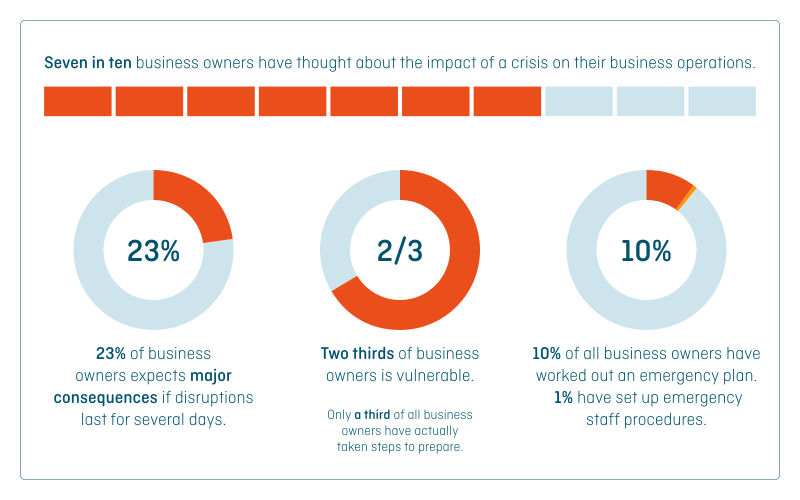
Business owners are aware of the risks but are not yet taking the right action.
- 7 in 10 business owners have thought about what a crisis would mean for their business operations.
- Almost a quarter of business owners expect major consequences if disruptions last for several days.
- Two-thirds of business owners are vulnerable. However, only one-third of business owners have actually taken measures.
- Emergency planning and emergency protocols for staff are hardly ever in place.
Source: KVK Weerbaarheid van ondernemers report (PDF, in Dutch).
Key roles in an emergency
- It helps to prevent panic and miscommunication if staff know what role everyone within the business has. So, establish the following roles:
- Emergency response officer. As an employer, you must arrange emergency response measures (bedrijfshulpverlening, BHV) and have 1 or more company emergency response officers (BHV'ers). A BHV’er is an employee who has been trained to act in case of an emergency, such as a workplace or industrial accident, or a disaster. They can bring staff, customers, or guests to safety and call in the emergency services. An emergency response officer can help extinguish a small fire. They can also administer first aid, for example if someone is injured or unwell.
- Crisis team. For example, made up of a member of senior management, a communications officer, a facilities manager, and a safety expert or the person responsible for the risk assessment and evaluation.
- Internal communications. Someone on the crisis team who informs all employees about the crisis and provides regular updates.
- External communications. A spokesperson who sends out a press release or email with information about the emergency or disruption.
Make sure that everyone in the crisis team has a clear role and knows which decisions they are authorised or required to make, such as closing the premises or informing external parties. Set out this division of roles in your emergency plan and always have a stand-in available in case of illness or absence.
Inform employees about the crisis team and their tasks, so that it is clear internally who is responsible for what. For example, include this information in your employee handbook.
Only 1% of all business owners have drawn up emergency procedures for staff
Informing and training staff
The crisis team oversees drawing up, practicing, and implementing the emergency plan. They are responsible for sharing information and knowledge when an emergency occurs, and also for the preparation. As part of the preparation, they can, for example, create and share the following:
- Checklists on how to act in an emergency
- Floor plans of the premises, including emergency exits and emergency equipment such as fire extinguishers and the first-aid kit
- Guides to working offline with, for example, the till or payment system
- Instructional videos on the use of offline communication tools
- E-learnings on preventing data breaches or cybercrime
- Descriptions of emergency scenarios, including an action plan
- An offline contact list of staff and essential suppliers
Do not forget to inform new employees about the crisis team and the emergency plan. Include this information in the onboarding of new employees. When they join the company, give them a tour of the premises, including escape routes.
In addition, refresher training in first aid and/or emergency response is mandatory. Most certificates are valid for 1 year. So schedule refresher courses.
Communication and accessibility
Ensure that all employees can use alternative communication channels in an emergency. Consider a combination of:
- Offline communication methods. Think of a walkie-talkie or text messaging.
- Offline contact details. Provide each employee with a list of (offline) contact details for the crisis team. Also specify other important emergency numbers or locations, such as the assembly point in the event of a fire and the address of an emergency workplace.
- Emergency instructions. State when and where employees must report in the event of an emergency. Indicate when it is safer to stay at home or at work, and how they can stay in contact if the internet or telephone lines fail.
- Preparation. State how an employee must prepare themselves, such as printing the contact list for home, setting up a text message group, or ensuring they have a charged satellite phone.
Practising emergency situations with staff
Practise scenarios such as power cuts, fire, or evacuation. These exercises provide insight into potential pitfalls, which helps improve the emergency plan and gives employees experience in acting swiftly and safely. You should hold an evacuation drill at least once a year, regularly test emergency communication tools, and simulate a cyberattack or data breach. Evaluate what went well and what did not and ask staff for feedback. They are often the first to spot where communication or procedures were unclear.
Frequently asked questions
As an employer with at least 1 employee, you are required to organise a business emergency response team (BHV) within your business and to appoint emergency response team members (BHV’ers). You must also ensure that the BHV’ers receive training and are provided with the necessary equipment so that they can carry out their duties effectively. The costs of this are your responsibility.
Appoint 1 person to act as the emergency safety officer. This person will be responsible for managing the emergency plan, coordinating during incidents, and communicating with the emergency services. Ensure you also have a designated deputy so that someone is always available. Make sure everyone knows who the emergency safety officer is.
An evacuation plan ensures that people can safely leave your premises in the event of an emergency. An evacuation plan sets out the procedures to follow in the event of a disaster, such as a fire. This includes clear instructions for your staff, escape routes, the roles and responsibilities of the emergency response , and the assembly point.
Practise evacuating your premises at least once per year. This will help prevent panic from breaking out in an emergency. An evacuation plan is not the same as a company emergency plan. An evacuation plan focuses solely on the evacuation itself and forms part of your company emergency plan.
Draw up an emergency plan to set out what employees should do in an emergency. Safety is the primary objective here. However, as an employer, you will want or need to know where your staff are and how they are doing. For example, if they are working from home and there is a nationwide power cut, set out how employees can get in touch and what information they should provide.