Tips for starting a second-hand shop
- Jozy Gallmann
- How to
- Edited 27 February 2026
- 2 min
- Starting
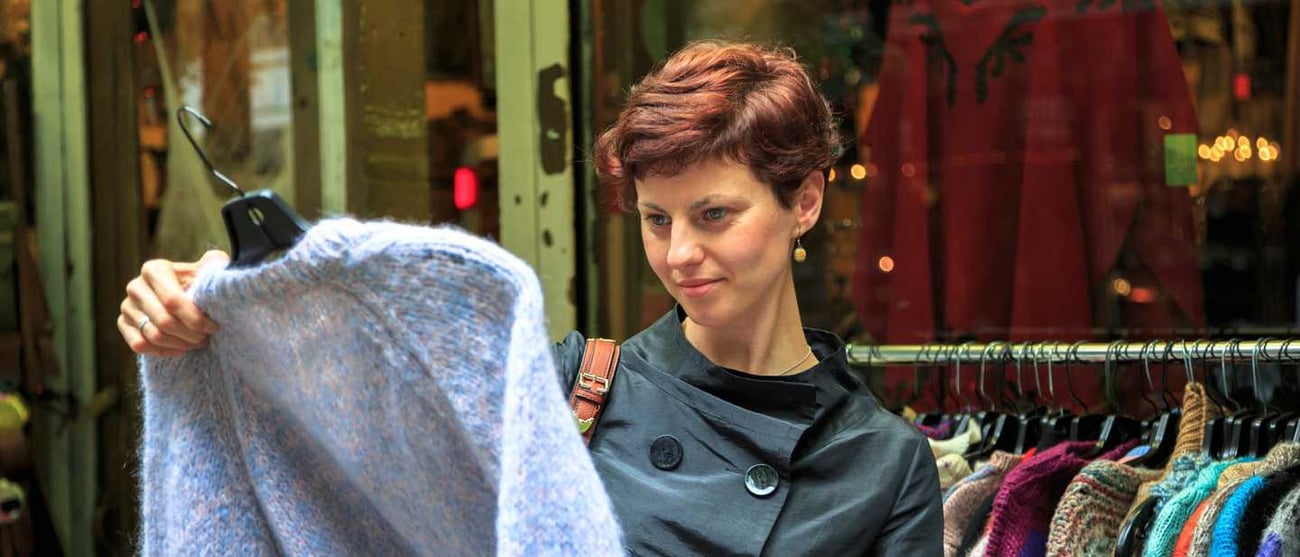
The number of second-hand shops is growing, both online and offline. Vintage clothes and retro furniture are particularly popular. How do you start a second-hand store? And do you need permits? Find out what you need to know to start your business in used goods.
What do you need to arrange when starting a business?
Answer the questions on Business.gov.nl and see the steps that are important in your situation.
If you want to start a second-hand store, these topics are important:
Growing market
You increasingly see shops selling vintage clothing, retro furniture and other second-hand items. On 1 January 2022, there were 4,724 second-hand shops registered with KVK. On 1 January 2026, there were 4,942.
A business plan will help you determine whether your business idea is feasible. Can you really make money with it? At the same time, you can see it as a kind of step-by-step plan: what do you need to do to turn your idea into a business?
Selling on consignment
You can also choose not to buy products yourself but sell them for the supplier. The items then remain the property of the supplier. This is called selling on . If you manage to sell the product, you get a part of the selling price. Make clear agreements about:
- How the supplier will deliver the products to you.
- For how long the products will remain in your shop.
- What you do with the products you do not sell.
- What you will do if a product is damaged in the shop.
Shop or online
You can sell products from a shop or online: via social media, your own online shop, or an online platform. Decide which of these methods best suits your potential customers.
Shop
When selling from a physical shop, you have to deal with the environment plan and the rules of the municipality. Before signing the lease, find out what you need to arrange. This way, you avoid having to pay rent while the shop is not allowed to open.
Online shop
Do you want to sell things online via an online shop? Then you must deal with laws and regulations. Such as the right to reflection time after purchase and the right to return products. The Authority for Consumers and (ACM) website explains what you have to comply with and what you have to state on your website.
Online platform
You can also sell used items via an online platform, such as Marktplaats, Bol.com, Vinted, or Zalando. This way, you start with low costs because you do not need shop premises and sometimes no storage space either. You also do not have to pay a developer to build a webshop for you.
Selling via a platform costs money. You pay a fixed amount when you sign up and the platform gets a share of what you earn. Each platform has its own rules. Find out about conditions and service standards. Think about keeping a minimum stock and being available by telephone for customers.
If you sell through an online platform, you also have rights. For example, a platform cannot simply delete your account.
Dealer register
Do you buy theft-sensitive used goods, such as gold, precious stones, or watches? Then keep a digital dealer . This is required by law and designed to prevent the handling of stolen goods. You must keep a record in this register of what you buy, on what date, for what price, and what the seller's personal details are. You report this to your municipality, which then carries out checks.
Margin scheme
Margin (in Dutch) are goods you buy without VAT. You may apply the margin if you meet these (in Dutch). You then charge VAT on your profit margin instead of on the selling price.
For the margin scheme, you must keep special purchase and sales records. This can be done in two ways: the globalisation method or the individual method. In both cases, administrative obligations apply. For example, you must use a purchase declaration if you purchase goods from one supplier for an amount higher than €500. The margin scheme applies in all EU countries. Read more about the margin scheme on .
General information for starters
As a starting business, you will also be dealing with:
- choosing a business name
- choosing a legal
- setting your hourly rate
- arranging tax matters
- drawing up general terms and conditions
- keeping records
- insurances
- and, in some cases: being a part-time entrepreneur