Solar panels and selling back to the grid
- 27 October 2022
- Edited 6 March 2026
- 1 min
- Sustainability
- Starting
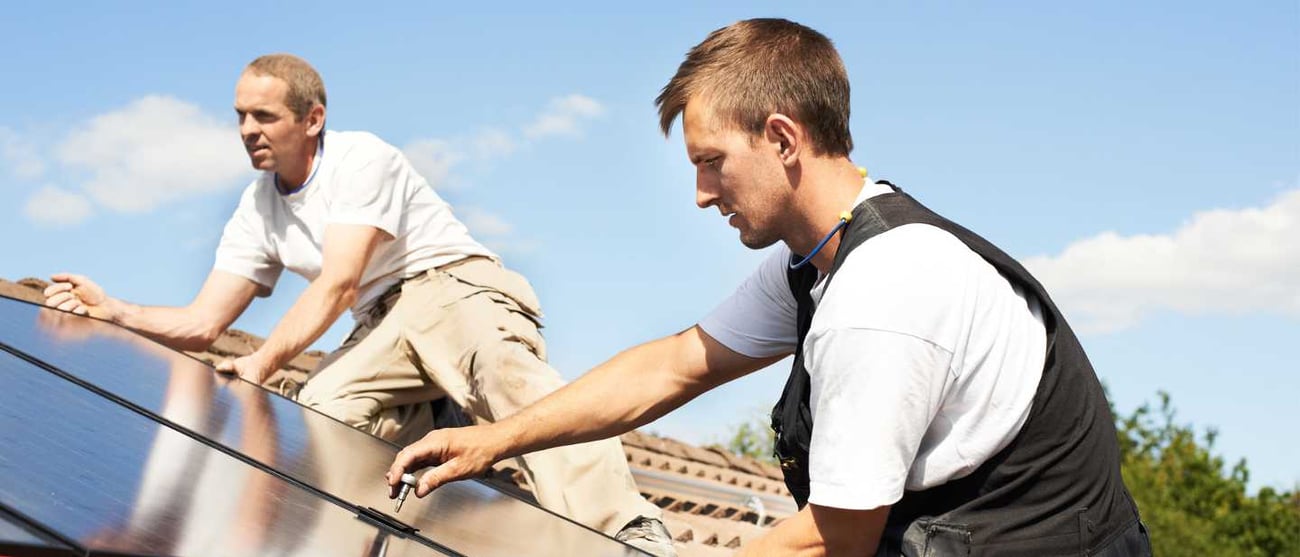
Are you considering solar panels for your business? Then it is good to know that the netting scheme, called the salderingsregeling in Dutch, will end in 2027. You will still benefit most if you use as much of the solar power yourself as possible.
Solar energy you generate yourself, you use directly in your daily electricity consumption. Do you generate more power than you can use? Then that power is automatically returned to the energy company. You get a feed-in tariff for this, but more and more energy companies also charge you for the feed-in of power.
Only for small consumers
The arrangement only applies to small consumers, with a business power connection of no more than 3x80 Ampères. Check with your energy provider if you are unsure.
How does the netting scheme work?
On your annual accounts, your energy supplier will offset the solar power you feed back against the power you consume. This is called netting (salderen).
For example: in 2025, you used 8,000 kilowatt hours (kWh) of electricity. That year, you also fed 2,500 kWh back into the grid. Your energy supplier deducts the 2,500 kWh from the 8,000 kWh you used. You then pay for 5,500 kWh for 2025.
How much money netting yields depends on various factors. For example: your supplier, your electricity consumption, the number of solar panels and whether you have to pay feed-in costs. You only pay consumption costs, energy tax, and VAT on the energy you consume.
Netting to end
The netting scheme ends in . From then on, you will no longer be able to offset your bills. However, you will still receive compensation for electricity you feed back. You will benefit most if you use the self-generated electricity yourself as much as possible. Or store it in a home battery and use it at other times.
Register for net metering
Do you want to make use of the salderingsregeling? Then you must register your solar panels at energieleveren.nl (in Dutch). It is an offence not to register your solar panels. Also, your energy supplier may decide not to compensate you for solar power you have put back in the grid.
Schemes for the purchase of solar panels
Are you planning to invest in solar panels? Find out if you can apply for one of the subsidies or tax that make buying solar panels cheaper. Here are a few of the main ones:
-
Reclaim VAT
Reclaim the 21% VAT you have paid on the purchase and installation of solar panels from the Dutch Tax Administration (Belastingdienst). Your legal business structure determines how to go about reclaiming the .
-
Small projects investment credit (KIA)
The KIA allows you to deduct part of your investment in solar panels from your profit, and pay less income tax. How much you may deduct depends on how much you invested.
-
Eco-investment schemes
The Energy Investment Allowance EIA and the Environmental Investment Allowance MIA also allow you to deduct eco-investments from your profit, so you pay less tax.