Emergency plan: how to get your business up and running again
- 4 May 2026
- 3 min
- Managing and growing
- Rinke den Os

Suddenly, everything can go wrong. Your business can come to a standstill because of cybercrime, fire, severe weather, or a major power outage. Less than 25% of self-employed professionals and small businesses are well-prepared for an emergency that temporarily shuts down their operations. In this article, you will learn what small steps you can take now. And how an emergency plan can help in a crisis.
With a strained power grid, wars, cybercrime, and a changing climate, there are many issues that could affect your business. Large companies are already taking measures and preparing for disruptions. However, SMEs and a large group of self-employed professionals are lagging behind, according to a KVK study (in Dutch). They don’t know what to do, underestimate the consequences of an emergency, or are daunted by the potential costs.
Still, you want to prevent your business from coming to a standstill and your income temporarily falling away. Preparing for such an emergency largely means raising awareness, with yourself and your staff. And expensive investments are not always necessary.
Internet outage or power cut
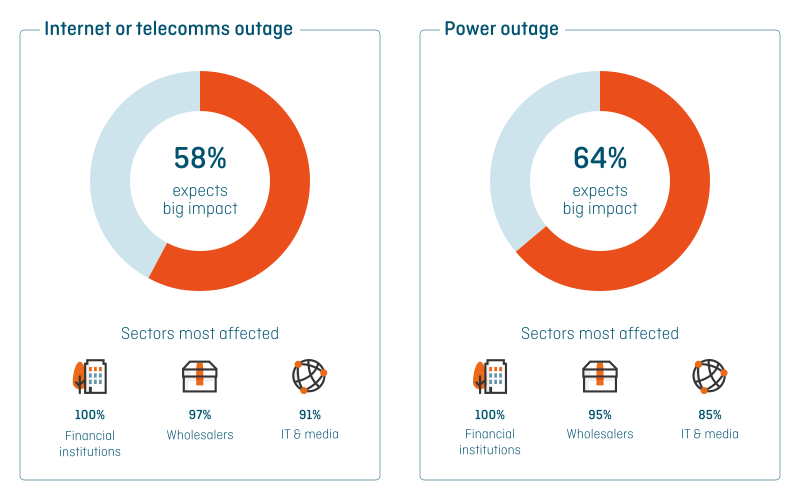
According to entrepreneurs, a power disruption or internet outage has a significant impact on their business.
58% expect a major impact. Sectors most affected:
- Financial institutions: 100%
- Wholesale: 97%
- IT & media: 91%
Power cuts
64% expect an impact. The sectors most affected are:
- Financial institutions: 100%
- Wholesale: 95%
- IT & media: 83%
Source: KVK Weerbaarheid van ondernemers report (PDF, in Dutch).
Prepare your business
Risks come in all shapes and sizes and from all directions. Any business can be affected. Yet as an entrepreneur, you are not necessarily vulnerable to all those threats.
Identify which risks could affect your business
It is important to identify which threats could affect you, where you are vulnerable, and what the consequences of an emergency might be.
- For an agricultural business, for example, extreme weather can be disastrous: hail, heavy rain, and drought can lead to a failed harvest.
- A wholesaler operating out of a warehouse might not be affected by weather conditions, but could suffer significant damage in the event of a fire or cyberattack.
Risk Awareness in 5 Steps
An emergency can catch you off guard. Still, you can take steps now to prepare for the day you might need them.
1. Identify your key risks
Want to know where you are vulnerable? First, determine what you want to protect. Think of data, products, machinery, or ongoing deliveries, for example. Once you know what you want to protect, start thinking about the risks. What threats could affect your business?
Example: You sell handmade personal care products. You rely on shea butter for this. You order herbs and oil from another supplier. A third supplier provides you with the appropriate packaging. Without the delivery of these items, you cannot sell your skincare products. So you want to ensure that you always have sufficient stock and that deliveries arrive on time. It would directly affect you if one of your suppliers could not deliver.
2. Discuss risks
Do you have a clear picture of what you absolutely want to protect? And have you identified the risks? Discuss them. If you have employees, involve them. If you are self-employed, choose people you trust, fellow business owners, or an expert. Ask them the questions you have already answered. Discuss the results and brainstorm together about what you’re protecting, what the risks are, and what solutions are available in an emergency.
3. Make plans
Now that you have clearly identified the risks, it is time for solutions. You might need help with this. For example, an expert who explains how to protect your business and data from cybercriminals. Or an insurer who tells you what you can and cannot cover with insurance.
4. Test the plans
How do you know if the solutions you have come up with actually work? Try them out with your staff. Set aside a few hours in your schedule and investigate. Do all your machines run on the generator if the power goes out? Does your cash register still work without an internet connection? This exercise is also a good test to see if the division of roles among your employees is correct.
5. Define your role
In a crisis situation, take care of yourself first. Once you are in control, take a good look around. Consider which customers and partners you need to inform immediately about the situation. Also, carefully assess whether people are heavily dependent on your business. For example, if you are a baker delivering fresh bread daily to healthcare facilities, it is important that they can find a solution in time. Consider where you may be able to offer your assistance with this.
Create an emergency plan
Once you have gone through the 5 steps above, you will have gathered a lot of valuable information. With this information, you are well on your way to creating an emergency plan. Click here to create your customised emergency plan.