Time to assess: do you continue or end your business?

- Gé Sletterink
- Background
- Edited 9 January 2026
- 2 min
- In trouble
- Finance
An unexpected event can affect the financial situation of your business. For example, delivery problems, or a price increase for raw materials that you cannot pass on to your customers. Or your business may suffer damage due to fire or flooding. If the financial problems persist, you are faced with a choice: continue doing business or stop. The flow chart helps you choose.
Continue, make a choice, or stop
The flowchart below is a simplification of reality. You see 3 options:
- Continue doing business
- Choose between continuing or stopping
- Stop doing business
Below the image, we explain the 3 options.
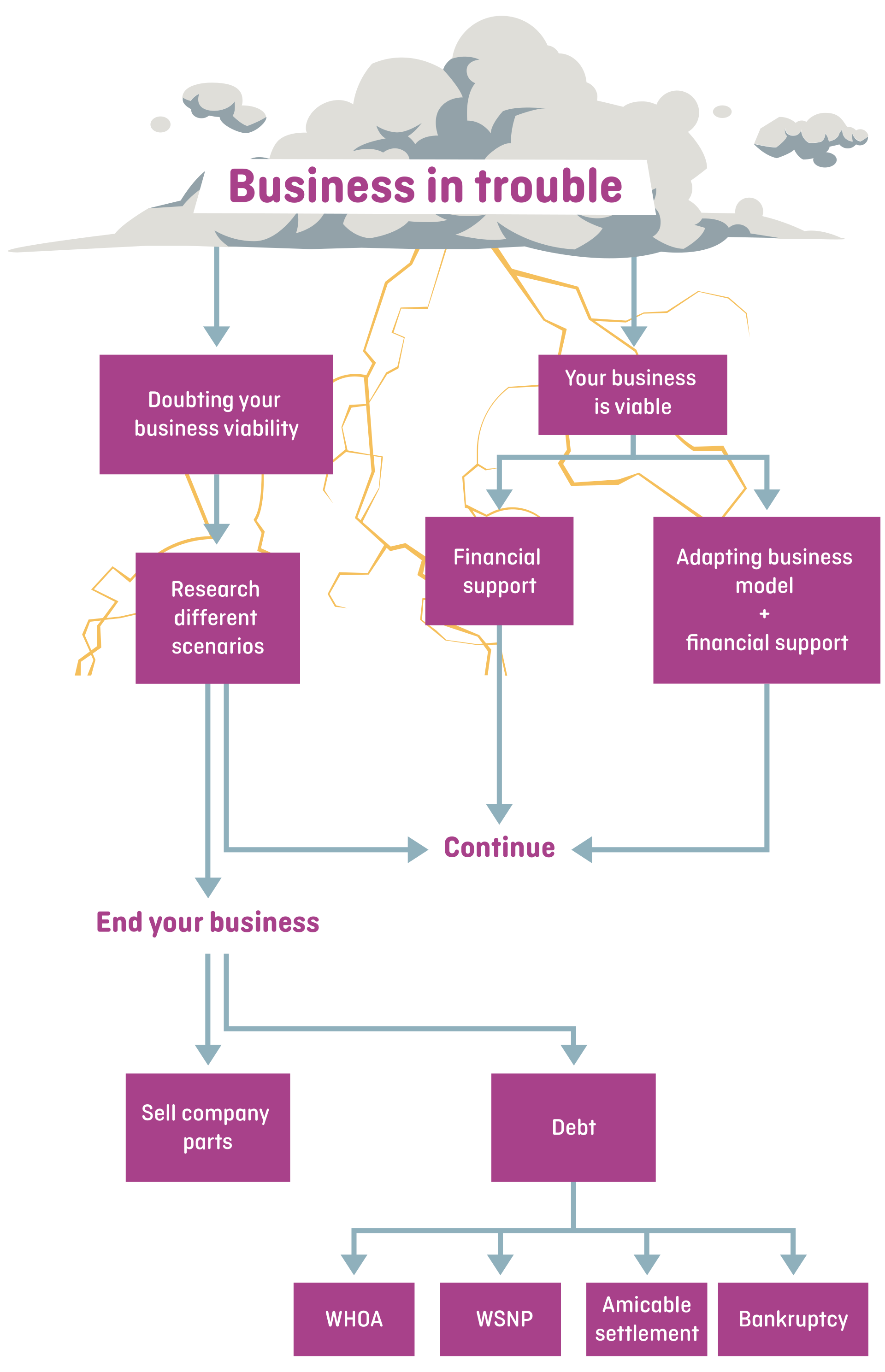
Flowchart business in trouble
In times of financial difficulty, you can choose to stop or continue. If your business is viable, you can look into bridging with financial aid or adjust your business model and apply for financial aid. Do you doubt its viability? Then examine the scenarios. If you stop, you can sell parts of the company or see how you can pay your debts, for example with the WHOA, Wsnp, amicable settlement, or file for bankruptcy.
1. Continue
Before you ran into financial problems, your business was profitable. You were earning a living from it. And you could pay all your expenses. Now that things are not going so well, you pay more attention to your costs. You want to save, put in private money, or think about an extra loan. You might also want to adjust your business operations. This is how you keep your business viable and you can continue with confidence. Do you recognise this? Then follow the step-by-step plan to get your business back in shape.
2. Choose between continuing or stopping
You have doubts about the viability of your company. You are at a tipping point and you have to make a choice. So you look at the 2 scenarios: to continue or to end your business. Which situation suits you best?
- Your company was doing well, but you are now in a bad financial position. You do expect that you can get your company ready for the future. For example, with a new business model and additional financing. Make a plan to deal with your financial problems. Use the step-by-step plan for a new business model.
- Your financial situation was already weak before the unexpected crisis. Now there are extra problem(s), you have to make a choice: do you continue with your business, or do you end it? Explore your options. That will give you some guidance in making your choice.
3. End your business
You doubt whether your company can become viable in the long term, and have investigated different possibilities. Financially you are in bad shape and the prospects are not good. It makes no sense to take on any new financing and, with that, additional debts. As emotional and difficult as it may be, ending your business is probably the right option. Use the checklist for ending your business to arrange things properly. Maybe you can sell part or all of your business .
Ending your business
There is more to ending your business than simply deregistering with KVK. Use the Checklist to see what you need to arrange before and after deregistering.
Resolving debts
Does your company have debts? Explore your options with our step-by-step plan for dealing with debts. This can be done with an amicable settlement for example. or debt under the Natural Persons Debt Restructuring Act (Wet schuldsanering natuurlijke personen, Wsnp). Also check if the Court Approval of a Private Composition (Prevention of Insolvency) Act (Wet Homologatie Onderhands Akkoord, WHOA) can help. If you can no longer make payment arrangements with creditors, the court can declare your company bankrupt. You can also file for bankruptcy yourself.
Help in times of crisis
Whatever your situation, there are organisations that can help. Discuss your situation with them. Ask, for example, how debt arrangements work. There are also online tools that give you more insight into the financial side of your business. Or contact the KVK Advice Team on 088 585 22 22.